
Cyber Security
5 Hours 30 mins
48 Students
79 Lessons
English
18 Structured Modules (Foundation to Intermediate)
Hands-on Lab Demonstrations (Safe & Legal Practice)
Networking & Linux Environment Setup
Web Security & Vulnerability Basics
API, Mobile & IoT Security Fundamentals
Career Roadmap & Job Guidance
This Cybersecurity Course is designed to take learners from foundational concepts to intermediate-level security knowledge in a structured and practical manner.
The course begins with cybersecurity fundamentals, mindset development, and career roadmap guidance. It then progresses into networking, Linux environment setup, web technologies, reconnaissance, vulnerability scanning, and OWASP basics.
Advanced modules introduce API security, mobile security fundamentals, IoT vulnerabilities, password security, digital forensics, privacy awareness, and cybersecurity career planning — ensuring a well-rounded and industry-aligned learning experience.
For Assignments and Projects Please go through this Link: CyberSecurity

Mentor Name: Aayush:
With 4+ years of experience in Cyber Security and Ethical Hacking, I have trained students, developers, and IT professionals to understand real-world cyber threats and how to defend against them effectively.
My training focuses on practical, hands-on learning, where students work with real tools and techniques used by security professionals to identify vulnerabilities and secure systems.
Key Expertise:
• 4+ Years of Training Experience in Ethical Hacking, Network Security, and Web Application Security.
• Hands-on experience with industry tools such as Kali Linux, Metasploit, Nmap, Wireshark, and Burp Suite.
• Teaching penetration testing, vulnerability assessment, and system security techniques used by professionals.
• Specialized in Web Security, including vulnerabilities like SQL Injection, Cross-Site Scripting (XSS), authentication flaws, and misconfigurations.
• Designed real-world labs and attack simulations to ensure students gain practical experience.
• Mentored hundreds of students in starting careers in Cyber Security, Bug Bounty, and Security Research.
Training Approach
The goal of this training is to help learners think like a hacker to secure systems like a professional, combining strong fundamentals with real-world cyber security practices.
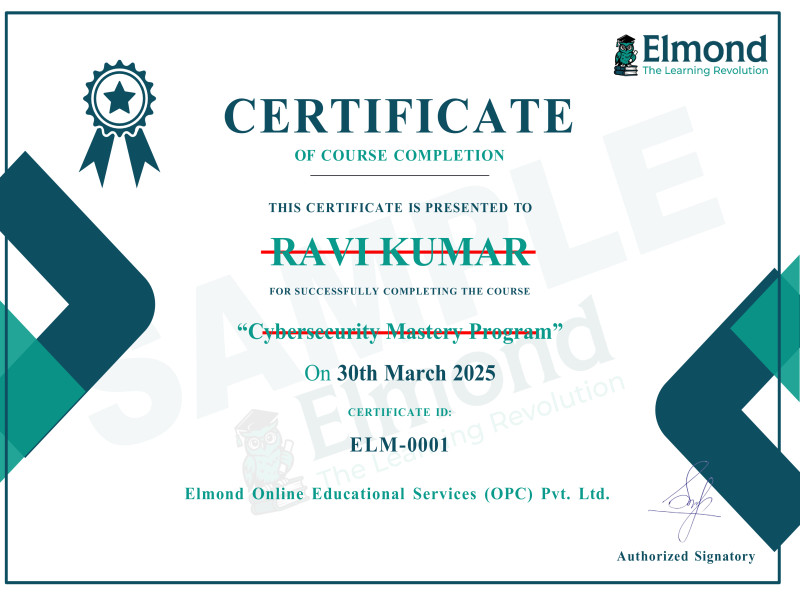
After successfully completing the Cybersecurity Course, you will receive an official Course Completion Certificate validating your foundational and intermediate-level cybersecurity knowledge.
This certificate demonstrates your understanding of networking, Linux, web security fundamentals, vulnerability assessment, API basics, and cybersecurity career readiness.
You can showcase this certification on your resume, LinkedIn profile, freelance portfolio, or job applications to demonstrate your practical security knowledge.